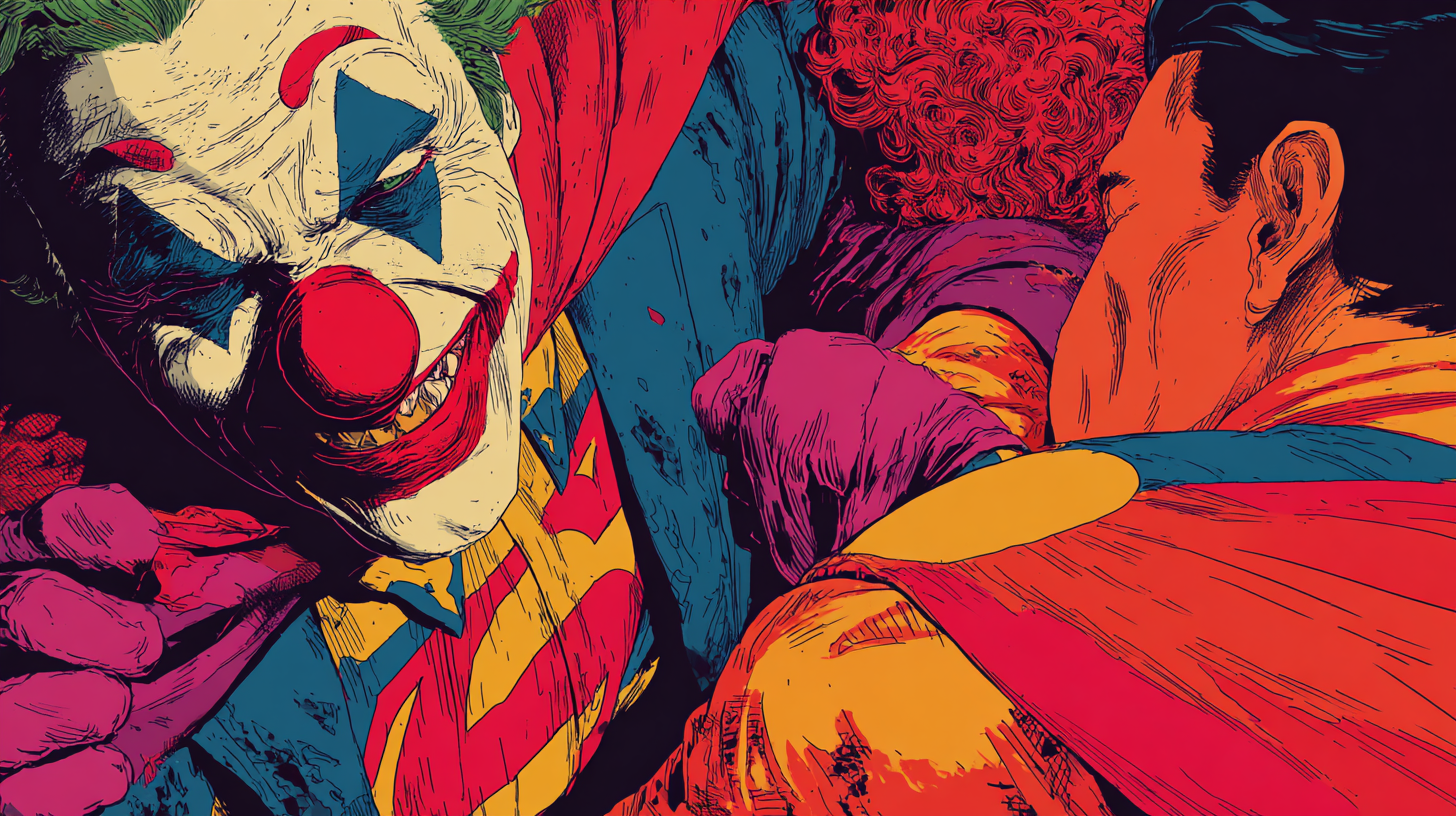
The Joker as Failed Übermensch
Nietzsche's ideas have leaked into the cultural water supply. "God is dead" shows up in song lyrics, TV shows, late-night dorm room arguments. "What doesn't kill you makes you stronger" is a gym-motivation poster. The Übermensch becomes shorthand for anyone who rejects traditional morality—ignoring that Nietzsche insisted the Übermensch must create something better.
The Joker inhaled these fumes. He absorbed pop-Nietzsche—the version where "God is dead" means "nothing matters" instead of "we must create meaning." Where "beyond good and evil" means "anything goes" instead of "forge your own values." Where the death of traditional morality is the end of the story, not the beginning.
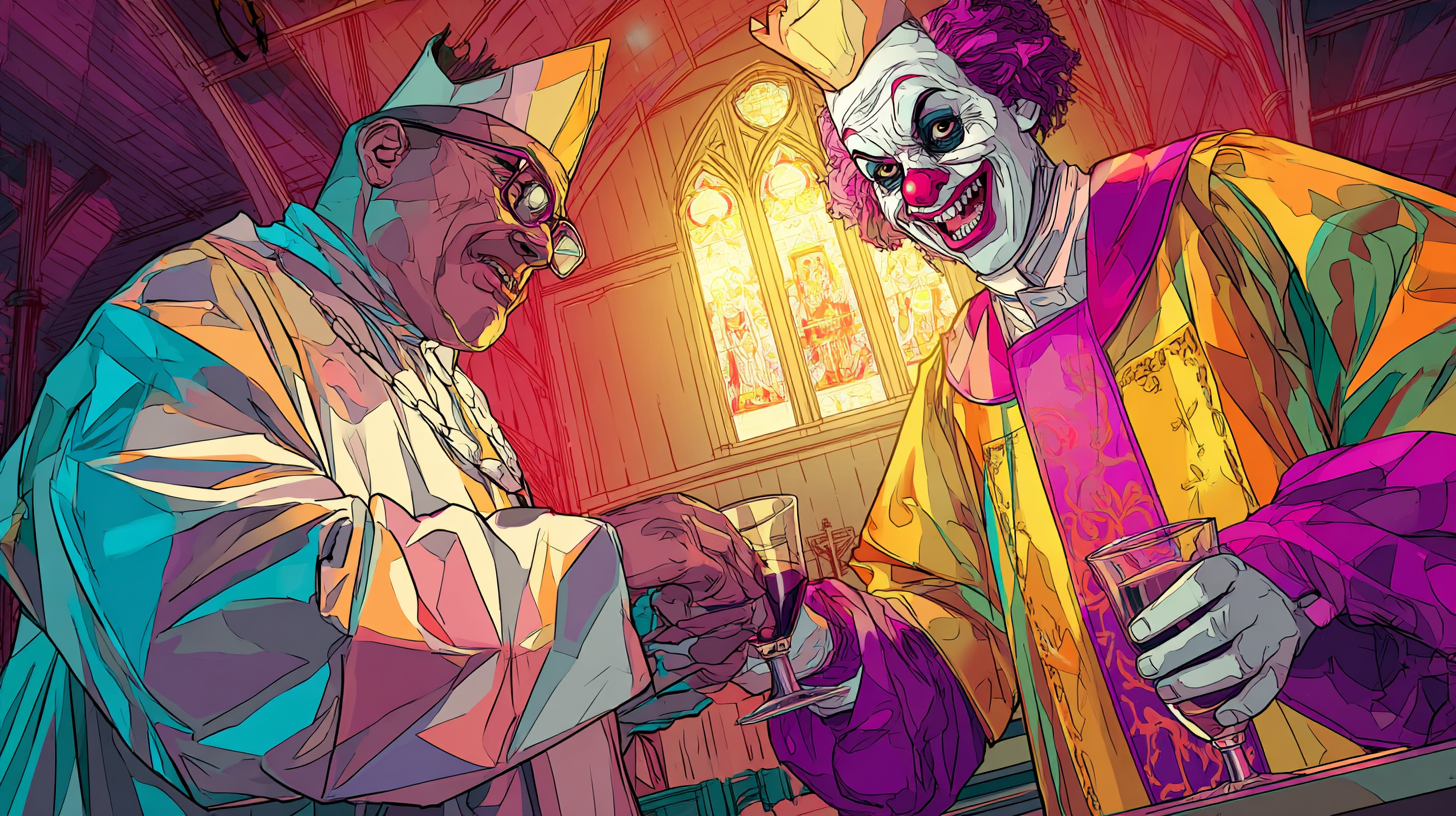
The Joker's Gospel of Despair
In the first post in this series, I compared Randall Flagg and the Joker as two faces of chaos—one building empires on the ruins he created, the other holding up a mirror to prove the ruins were always there. Today I want to dig deeper into what makes the Joker so theologically unsettling, especially if you understand the Christian framework he's weaponizing.
Because here's the thing: the Joker doesn't reject Catholic teaching on human brokenness. He weaponizes it. St. Paul diagnoses the wound; the Joker rubs salt in it. Paul offers a resurrection; the Joker offers a punchline.

Demon King vs. Clown Prince
One is Randall Flagg, Stephen King's multiversal devil—smiling "like the last light of sunset," voice honey over broken glass. The other is the Joker, Heath Ledger's scarred id—voice switching from carnival barker to funeral director in the same breath.
Flagg builds hierarchy from ruin; the Joker tears off the mask and makes you watch. If Flagg is the CEO of the abyss, the Joker is its brand ambassador.